

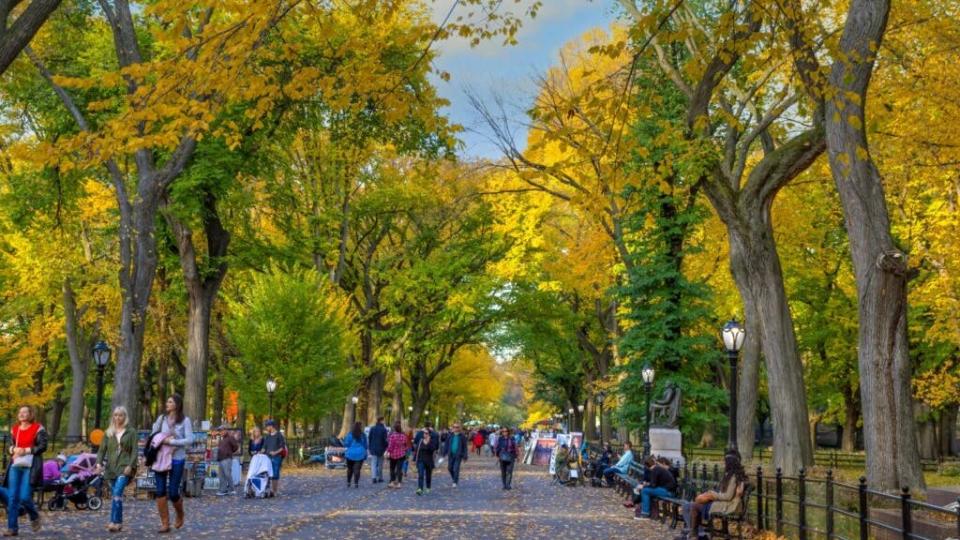
In a recent conversation about retirement savings with Vox, labor economist Teresa Ghilarducci set some strict benchmarks: by the age of 30, you should have saved one time of your annual salary. from 40, two and a half to three times; and by 60, eight to 10 times. Those numbers stunned many New Yorkers, like Vanessa Longshaw, a 34-year-old vice president of communications. “Can you see I’m laughing because who could save so much?” he said.
Dont miss:
Ghilarducci recognized the terrifying reality. “I know real Americans just don’t have it. The math of what you’re supposed to have and what people actually have is a huge gap,” he said. John Scott, director of the Retirement Savings Project at the Pew Charitable Trusts, echoed that sentiment, noting that the average retirement savings for non-retired Americans is about $45,000, meaning half have even less.
Steven Drukman, a 50-year-old playwright and professor, acknowledges his deficit with a mixture of resignation and humor. “Okay, okay, so I’ve got some work to do,” he admitted, followed by nervous laughter. He has about $250,000 in savings and a TIAA Cref plan that could grow to $500,000 if he keeps working. “I’m close, actually, now that I think about it,” he said, reflecting a cautious optimism.
Ghilarducci explains that the underlying issue is systemic. “The reason why a miner and a lawyer could wait to retire is because of the design of our pension system, which we no longer have,” he said. Traditional pensions, which provided a secure retirement, have been largely replaced by 401(k) plansshifting the burden of saving and investment to individuals.
Trending: Rory McIlroy’s Florida mansion is worth $22 million today, doubling from 2017 — Here’s how you can start investing in real estate with just $100
“We changed the federal pension laws so that the traditional pension became less attractive to employers,” Scott noted. Originally intended as a secondary savings tool for higher-income earners, the 401(k) has become the primary retirement savings vehicle for most Americans.
For many, this change was challenging. Erma Bridgewater, a 72-year-old retired nurse, recounted the difficulty of maintaining her savings while managing two mortgages. “Having to dip into it all the time…I feel like it wiped me out,” she said. Younger workers, like John Cifuentes, a 27-year-old civil engineer, are struggling. With a salary of $105,000, Cifuentes knows the need to save, but struggles to navigate the complexities of retirement planning.
Vanessa Longshaw, who earns $140,000 a year, shares a similar struggle. After living and working in the UK for six years, she has about $15-16,000 in her 401(k) and contributes to a Roth IRA. “I navigated my twenties and my finances pretty much in a vacuum. And I made some mistakes,” she admitted.
The lack of universal access to pension schemes exacerbates these challenges. “Half of the workers don’t have a way to save for retirement,” Ghilarducci pointed out. This is in sharp contrast to other countries where workers are automatically enrolled in pension schemes. In the US, individuals must actively choose to save, often without adequate financial education.
Read next:
“ACTIVE INVESTORS’ SECRET WEAPON” Load up your Stock Market game with the #1 “news & everything else” trading tool: Benzinga Pro – Click here to start your 14 day trial now!
Get the latest stock analysis from Benzinga?
this article New Yorkers react to retirement numbers, exclaiming “Who could save so much?” originally appeared on Benzinga.com
© 2024 Benzinga.com. Benzinga does not provide investment advice. All rights reserved.


Leave a Reply