
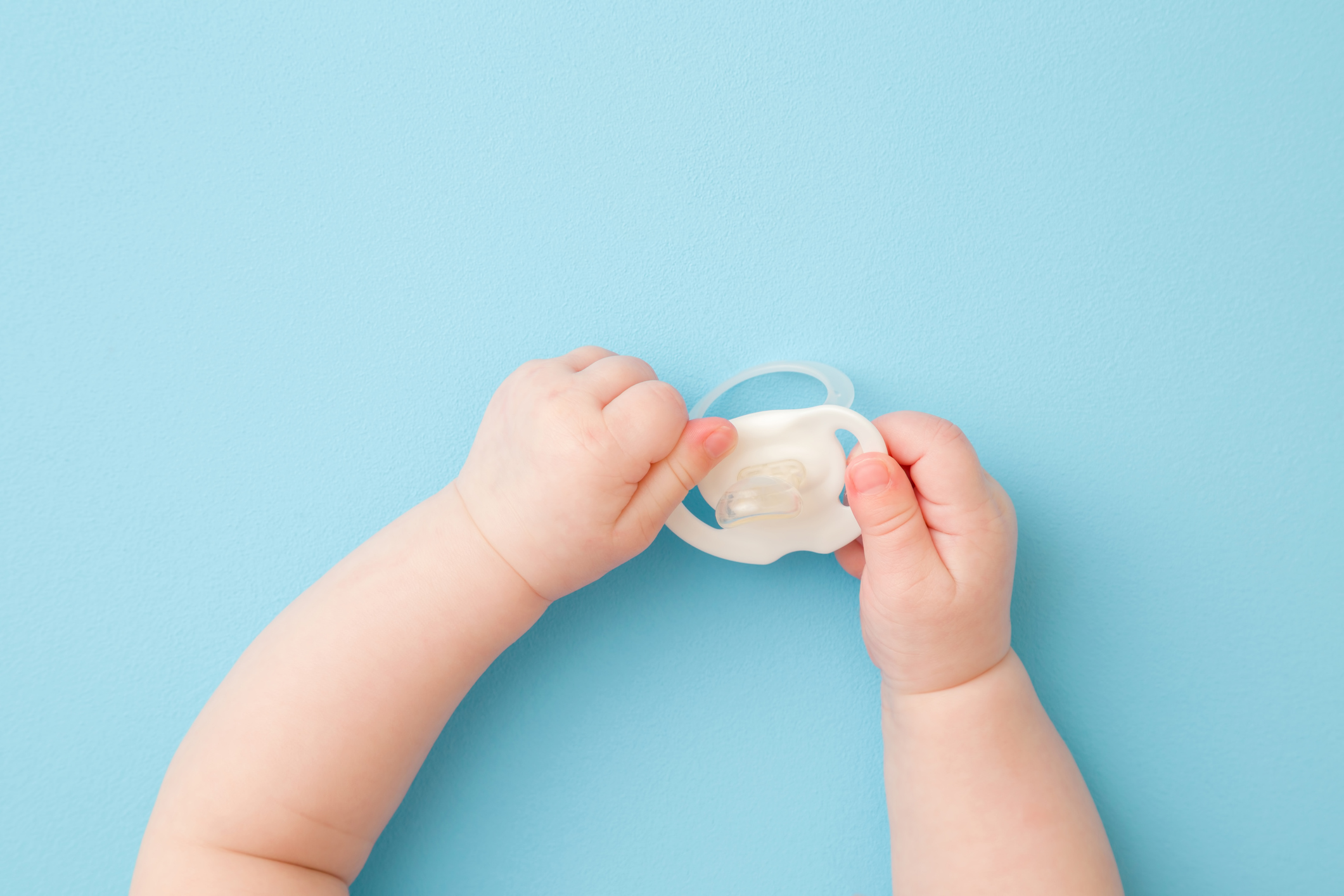
Researchers have found that excessive exposure to pacifiers affects infants’ language skills by age 2.
The study looked at 1,187 infants based in Oslo, Norway, to investigate the speech and language consequences of pacifier use.
The infants were divided into two age groups, 12 months and 24 months. The parents of each child were asked to provide detailed hourly reports specifying how regularly they administered joint comfort to their offspring.
This was achieved at two-month intervals, where the team were able to calculate the total number of hours spent with the soother during their childhood so far, known as Lifetime Pacifier Use (LPU).
Each parent also completed detailed questionnaires containing Communicative Development Inventories (CDIs) – lists of words common in each age group’s vocabulary and whether or not their child was familiar with them. The scope for 24-month-olds in this case was up to 731 words. CDI scores were converted to age- and sex-adjusted percentages using Norwegian norms. His findings showed that children with higher LPU enter life as 2-year-olds with less vocabulary at their disposal.
Children with higher mean LPU as they approached age 2 had lower scores on comprehension and vocabulary production—the ability to speak and be spoken to. By extension, they are more likely to be in the lower percentile for vocabulary size. The more a pacifier was used, the lower the child’s vocabulary score.
Specifically, controlling for the number of hours each participant used a pacifier—in some cases, reducing the total hours for those with addictive tendencies—saw no changes in their vocabulary. The speech restrictions were removed, but the developmental restrictions remained in place.

Getty Images
Pacifier use in the US peaks at about 3 months. While the health benefits (relieving discomfort and preventing sudden infant death syndrome (SIDS))—sometimes known as “crib death”—are widely supported, the American Academy of Pediatrics recommends discontinuing pacifier use by age 3 .
Previously, this was due to concerns about the physical harms of pacifier addiction, notably dental damage and an increased risk of middle ear infections (otitis media). Until 85 percent of Western infants they use one at any point in their development.
This new information provides a further contribution to a growing scientific consensus that these effects go beyond the physical and social, hindering a key period in a child’s development.
Experts argue that extensive pacifier use can limit the amount of time infants spend practicing verbal communication, thus hindering their vocabulary development. At a younger age, infants who have pacifiers in their mouths have fewer opportunities to practice making sounds and forming words, which are vital to the development of language skills.
Regarding future assessments, the study recommends that it is “important to note that the effect of pacifier use on early language development may be moderated by other factors such as parent-child interactions, parental depression, or child temperament.”
Is there a health problem that worries you? Let us know via health@newsweek.com. We can ask for expert advice and your story could be featured Newsweek.
Uncommon Knowledge
Newsweek is committed to challenging conventional wisdom and finding connections in search of common ground.
Newsweek is committed to challenging conventional wisdom and finding connections in search of common ground.



Leave a Reply